
Puppy Training Basics: What to Focus on in the First Few Weeks
Puppy Training Basics: What to Focus on in the First Few Weeks
Bringing home a puppy is exciting, chaotic, and full of small learning moments — for both you and your dog.
The first few weeks are where everything starts. This is when puppies begin learning routines, boundaries, and how to feel comfortable in their new home.
The good news? You don’t need to teach everything at once.
Focusing on a few key basics early on can make a huge difference.
1. Start With a Simple Routine
Puppies thrive on consistency.
Feeding, potty breaks, playtime, and sleep should follow a predictable rhythm as much as possible. This helps your puppy understand what to expect and reduces anxiety.
A simple routine also makes training easier, especially for house training.
2. House Training Takes Consistency (Not Perfection)
Accidents are part of the process.
The key is frequency and consistency:
- Take your puppy outside often (after waking, eating, and playing)
- Reward successful potty breaks immediately
- Stay calm when accidents happen
Over time, your puppy will start to connect the dots.
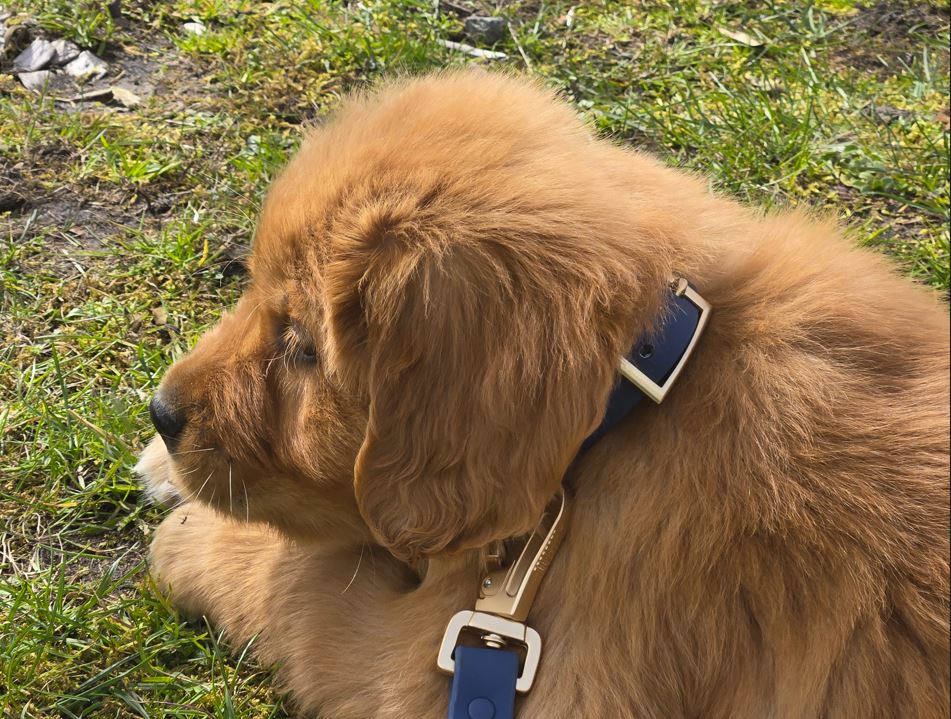
3. Introduce a Collar and Leash Early
The earlier your puppy gets used to wearing a collar and leash, the easier it will be later.
At first, your puppy might:
- Scratch at the collar
- Walk a bit awkwardly
- Try to chew the leash
This is completely normal.
Start with short sessions indoors and gradually increase the time as they adjust.
A lightweight, comfortable collar makes this transition much easier.
4. Focus on Basic Commands
You don’t need advanced training right away.
Start with simple, useful commands:
- Sit
- Come
- Stay (short durations at first)
- Name recognition
Keep sessions short (5–10 minutes) and always end on a positive note.
5. Socialization Is Just as Important as Training
One of the most important things you can do early on is safely introduce your puppy to new experiences.
This includes:
- Different environments
- Friendly people
- New sounds
- Other dogs (in controlled settings)
Early positive exposure helps build a confident, well-adjusted dog.
6. Keep Training Positive
Puppies learn best through positive reinforcement.
Use:
- treats
- praise
- play
Avoid punishment-based training — it can create fear and confusion instead of learning.
7. Be Patient (Progress Isn’t Linear)
Some days your puppy will seem to “get it.”
Other days… not so much.
That’s completely normal.
Training takes repetition, consistency, and time.
Gear That Makes Training Easier
Having the right gear can make early training much smoother.
A collar and leash that are:
- Comfortable
- Durable
- Easy to clean
can make daily walks and practice sessions easier for both you and your puppy.
You can explore our waterproof dog collars for puppies and active dogs — designed for real-life adventures, from rainy walks to muddy parks.
Final Thoughts
The first few weeks with a puppy aren’t about perfection — they’re about building a foundation.
Small, consistent steps lead to big progress over time.
And somewhere along the way, between the training sessions and the learning moments, you’ll realize your puppy is starting to feel right at home.