
Dog Collar vs. Harness: Which Is Best for Your Dog?
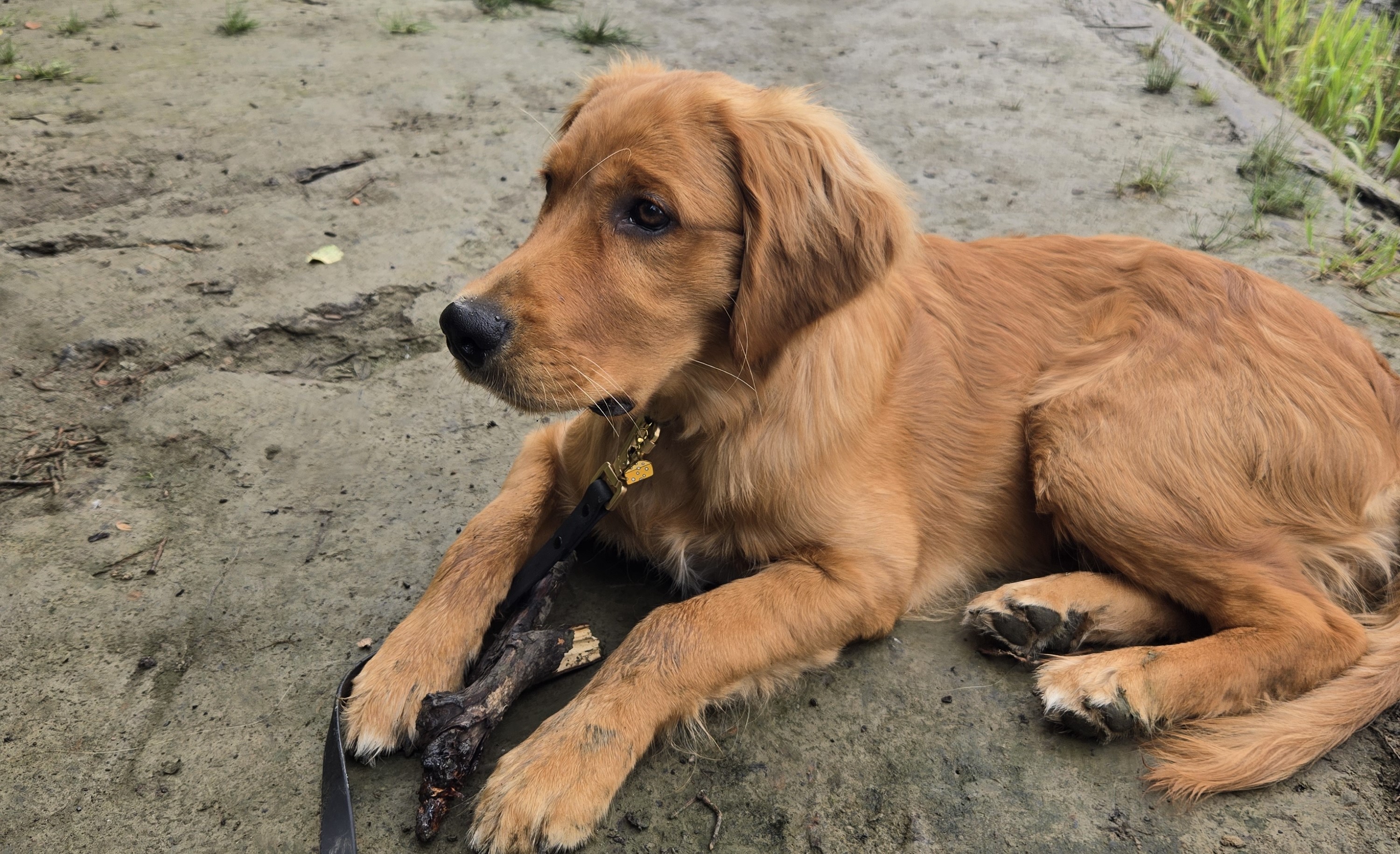
Dog Collar vs. Harness: Which Is Best for Your Dog?
Choosing between a dog collar and a harness might seem like a simple decision, but the right walking gear can make a big difference to your dog's comfort, safety and everyday adventures.
Whether you're taking your puppy on their first neighbourhood walk, exploring the trails with your energetic golden retriever, or enjoying a leisurely stroll with your four-legged companion, it's worth understanding the differences between these two popular options.
So, should your dog wear a collar or a harness? The answer depends on your dog's size, breed, walking habits and individual needs.
Let's take a closer look.
What's the Difference Between a Dog Collar and a Harness?
Although both collars and harnesses serve the purpose of keeping your dog safely connected to a leash, they work quite differently.
A dog collar fits around your dog's neck and typically features a buckle or quick-release fastening. Most collars include a ring for attaching a leash and provide a convenient place to display identification tags.
A dog harness fits around your dog's chest and torso, distributing leash pressure across a larger area of the body rather than concentrating it around the neck.
Both have advantages, and neither is automatically the perfect choice for every dog.
The Benefits of Using a Dog Collar
Dog collars are a popular everyday accessory for good reason. They're lightweight, convenient and available in a variety of styles, colours and materials.
Here are some of their biggest advantages.
1. Convenient for Everyday Identification
One of the most important functions of a dog collar is providing a place to attach identification tags.
Even dogs that spend most of their time indoors or have excellent recall can occasionally get loose. Having identification readily visible can help someone reunite you with your pet if they wander away.
A properly fitted flat collar is a practical option for carrying identification.
2. Lightweight and Comfortable
Many dogs find a lightweight, properly fitted collar comfortable to wear throughout the day.
Unlike some harness designs, collars don't have straps running across the chest, shoulders or torso. This means they generally allow unrestricted movement of the front legs and shoulders.
3. Easy to Put On and Take Off
Collars are typically quick and straightforward to fasten, making them convenient for everyday use.
They're particularly useful for dogs that are already comfortable walking on a loose leash and don't require additional control from a harness.
4. A Little Personality Goes a Long Way
Let's be honest: collars are also a fun way to show off your dog's personality.
From classic neutrals to playful colours and coordinating accessories, there are plenty of ways to make your dog's everyday essentials feel a little more personal.
A stylish collar and matching leash can make even an ordinary neighbourhood walk feel like an occasion.
One thing to remember: Collars aren't ideal for every walking situation. Dogs that pull hard can experience concentrated pressure around the neck, potentially affecting delicate structures in that area.
The Benefits of Using a Dog Harness
Harnesses have become increasingly popular, particularly among puppy owners and people with dogs that pull on their leash.
Rather than attaching the leash directly to the neck, a harness distributes pressure across the dog's body.
Here are some of the benefits.
1. Reduces Direct Pressure on the Neck
This is one of the biggest advantages of using a harness.
When a dog pulls against a traditional collar, pressure is concentrated around the neck. A harness shifts much of that pressure towards the chest and torso.
This can be particularly helpful for dogs with neck sensitivities, certain respiratory conditions or a tendency to pull.
2. Provides Additional Control
Harnesses can offer better handling and control, particularly when walking larger, energetic or easily distracted dogs.
Some harnesses feature a front leash attachment, which can help redirect a dog towards their handler when they pull.
However, a harness isn't a substitute for leash training. Your dog will still need to learn how to walk politely.
3. A Good Option for Puppies
Puppies are naturally curious, excitable and sometimes unpredictable.
A properly fitted harness can be a useful option while they're learning to walk on a leash, particularly if they tend to lunge towards interesting smells, people or other dogs.
It can also help avoid repeated pressure around a puppy's developing neck during those early walking adventures.
4. Useful for Certain Breeds
Some dogs may benefit from wearing a harness rather than relying on a traditional neck collar for walking.
This includes brachycephalic breeds (dogs with shorter, flatter faces), such as Pugs, French Bulldogs and English Bulldogs, as well as dogs with certain neck or airway conditions.
Your veterinarian can help determine which type of walking equipment is most appropriate for your dog's individual needs.
Dog Collar vs. Harness: Which Is Better for Dogs That Pull?
If your dog turns every walk into a strength-training session, you're probably wondering which option is better.
Generally, a well-fitted harness is a better starting point for dogs that pull consistently.
A traditional flat collar concentrates leash pressure around the neck, which can become uncomfortable or potentially harmful when a dog repeatedly pulls.
However, not all harnesses are created equally.
Back-clip harnesses: These have a leash attachment positioned between the shoulder blades. They're generally comfortable for dogs that already walk nicely on a leash, although some dogs may find it easier to pull against this design.
Front-clip harnesses: These feature a leash attachment on the chest. They can help redirect dogs that pull by turning their body towards the handler.
Dual-clip harnesses: These offer both front and back attachment points, providing additional flexibility depending on the walking situation.
A 2025 scientific review examining research on collars, harnesses and other walking equipment found that non-tightening front-clip harnesses may offer a useful balance of comfort and pulling management.
It's important to remember that equipment alone won't solve leash-pulling behaviour. Positive reinforcement and consistent training are still essential.
Does Your Dog's Breed and Size Matter?
Absolutely!
Different breeds have different body shapes, physical characteristics and walking needs. What works wonderfully for one dog might not be suitable for another.
Here are a few examples.
Small breeds: Smaller dogs can be more vulnerable to pressure around the neck, particularly if they pull or have respiratory sensitivities. A well-fitted harness may be a more suitable walking option.
Large and energetic breeds: Dogs such as Golden Retrievers, Labradors and German Shepherds can benefit from a harness that provides comfortable handling and control, especially while learning loose-leash walking.
Flat-faced breeds: Pugs, French Bulldogs and similar breeds may benefit from harnesses that avoid pressure around the neck and throat.
Dogs with excellent leash manners: Dogs that consistently walk without pulling may be perfectly comfortable using a traditional flat collar and leash.
Ultimately, your dog's individual needs matter more than their breed alone.
Can Your Dog Wear Both a Collar and a Harness?
Yes! In fact, many dog owners choose to use both.
A collar can carry your dog's identification tags, while a harness is used as the primary attachment point during walks.
This combination offers the convenience of everyday identification alongside the additional comfort and handling benefits of a harness.
If your dog wears both, make sure each piece of equipment fits properly and doesn't rub, restrict movement or become tangled.
Remember to supervise dogs wearing collars or harnesses, particularly during playtime, as equipment can become caught on objects or other dogs.
How to Choose the Right Dog Walking Accessories
Whether you decide on a collar, harness or combination of both, comfort and fit should always come first.
Here are a few things to consider before making your choice.
1. Check the fit. A collar should be snug without being restrictive. A common guideline for a flat collar is to comfortably fit two fingers between the collar and your dog's neck.
2. Consider your dog's walking habits. Does your dog walk calmly beside you, or are they easily distracted and prone to pulling? Their behaviour can help determine which equipment is appropriate.
3. Look for quality materials. Walking accessories should be durable, comfortable and suitable for your dog's everyday activities.
4. Make sure movement isn't restricted. Harness straps shouldn't rub behind the front legs or interfere with natural shoulder movement.
5. Introduce new equipment gradually. Allow your dog time to become comfortable wearing a new collar or harness before heading out on longer walks.
6. Don't forget the leash! A comfortable, appropriately sized leash is just as important as the collar or harness itself.
The Final Verdict: Collar or Harness?
So, which is better?
The truth is that there's no universal winner. The best option depends on your dog's individual needs, physical characteristics and walking behaviour.
A collar is a convenient choice for everyday identification and dogs that walk comfortably without pulling. A well-fitted harness can be a better option for dogs that need additional handling support or should avoid pressure around their neck.
And there's no reason you can't use both!
At Monterey x Jack, we believe everyday pet essentials should combine practicality with a little personality. From comfortable collars to coordinating leashes, the right accessories can make every adventure that much more enjoyable.
Because whether your dog is a perfectly behaved walking companion or a four-legged explorer with a mind of their own, there's always another adventure waiting around the corner.
Happy walking!